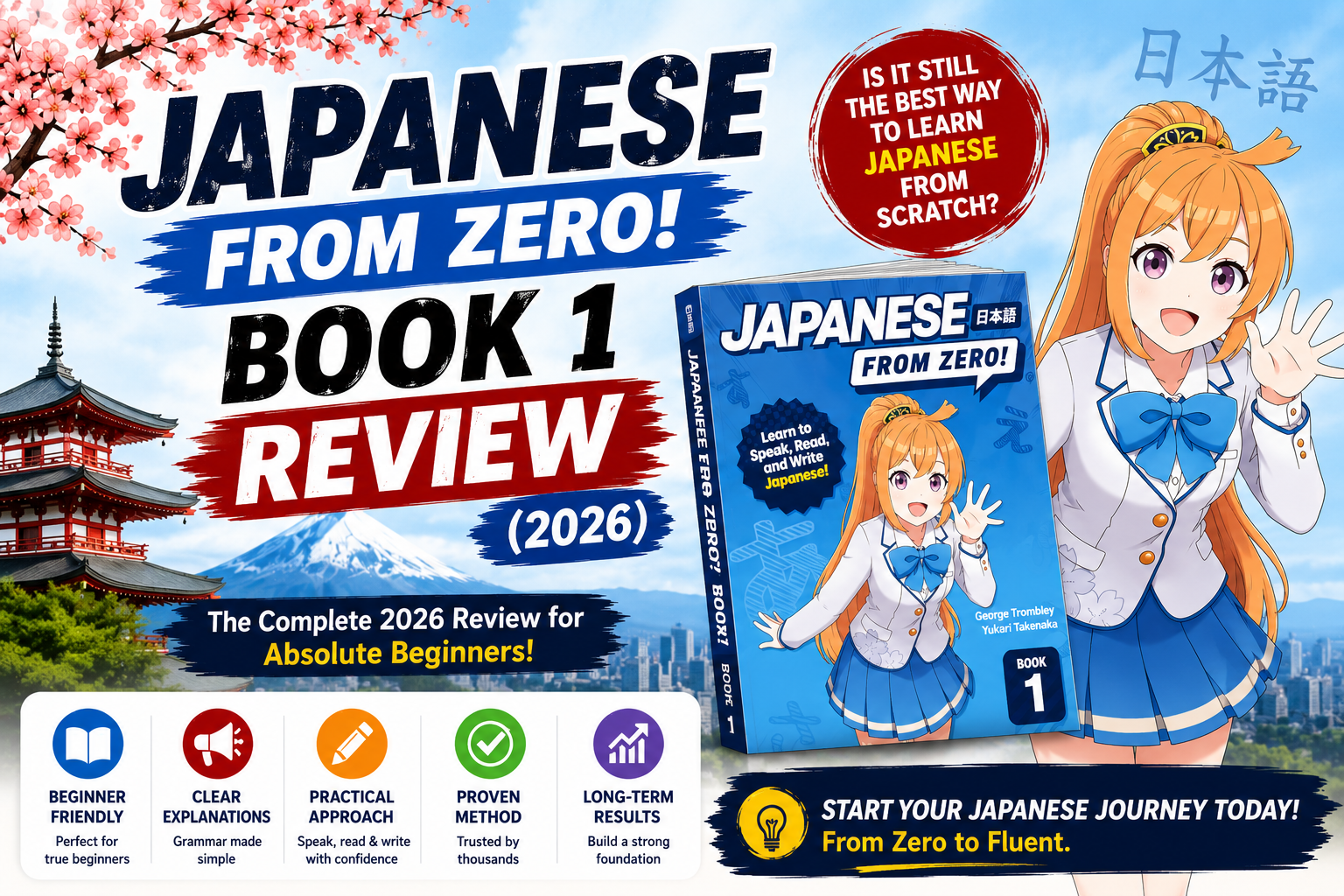
Japanese From Zero! Book 1 Review (2026): Is It Still the Best Way to Learn Japanese From Scratch?

Disclosure: This post contains Amazon affiliate links. As an Amazon Associate, I earn from qualifying purchases at no extra cost to you. I only recommend materials I’d actually hand to my own students.
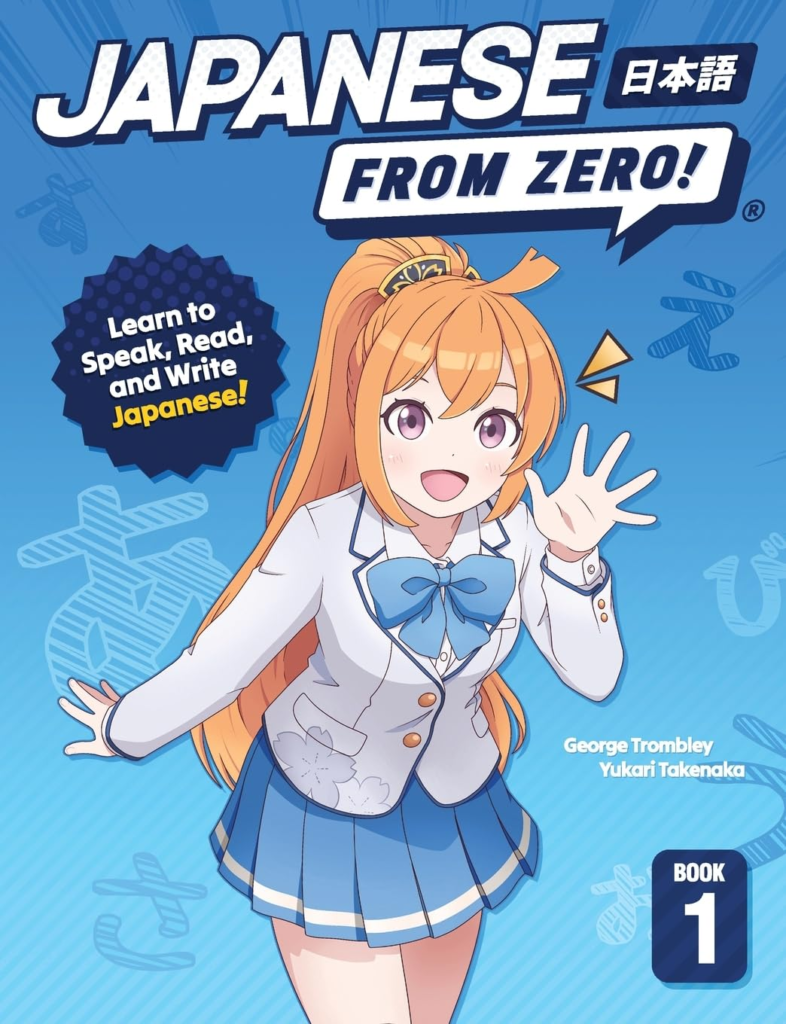
If you’ve typed “best book to learn Japanese for beginners” into Google more than once, you’ve already run into Japanese From Zero! Book 1 by George Trombley and Yukari Takenaka. It’s one of the most recommended self-study textbooks on the market, with hundreds of thousands of copies in circulation and a free companion video series that’s become almost as popular as the book itself.
As a Japanese tutor, I get asked about this book constantly — usually by adult beginners who’ve heard it’s “easier” than Genki but aren’t sure if that’s a compliment or a warning. Below is my honest, no-fluff breakdown of who this book is actually for, what’s inside, and whether it deserves a spot on your desk.
Quick Verdict
- Best for: Absolute beginners with zero Japanese background, self-studiers without a teacher, anime/drama fans wanting a gentle entry point
- Not ideal for: Anyone who has studied another language formally and wants a fast, academic pace, or students who need to be exam-ready quickly
- Format: Textbook + integrated workbook + answer key, 376–378 pages
- Pairs well with: Japanese From Zero! Book 2, Hiragana From Zero!, the free YouTube lesson series
- My rating: 4 out of 5 for true beginners; 3 out of 5 if you already have some Japanese or language-learning experience
Check current price on Amazon →
Who This Book Is Actually For
The single biggest factor in whether you’ll love or dislike this book is your starting point.
You’ll probably love it if:
- You’ve never studied Japanese (or any foreign language) before
- You get overwhelmed easily and need information introduced in small doses
- You’re a self-studier with no classroom, teacher, or study partner
- You want a video lesson to go alongside every chapter
- You’re a younger learner, or an adult who simply prefers a friendly, conversational teaching tone over a dry academic one
You might want to skip it (or move fast through it) if:
- You’ve studied another language formally and are comfortable with grammar terminology
- You want to be drilling JLPT N5 practice tests within a few weeks
- You’d rather learn hiragana all at once instead of gradually over several chapters
- You’re choosing a textbook for a university or classroom course (most classrooms use Genki or Minna no Nihongo)
What’s Actually Inside Book 1
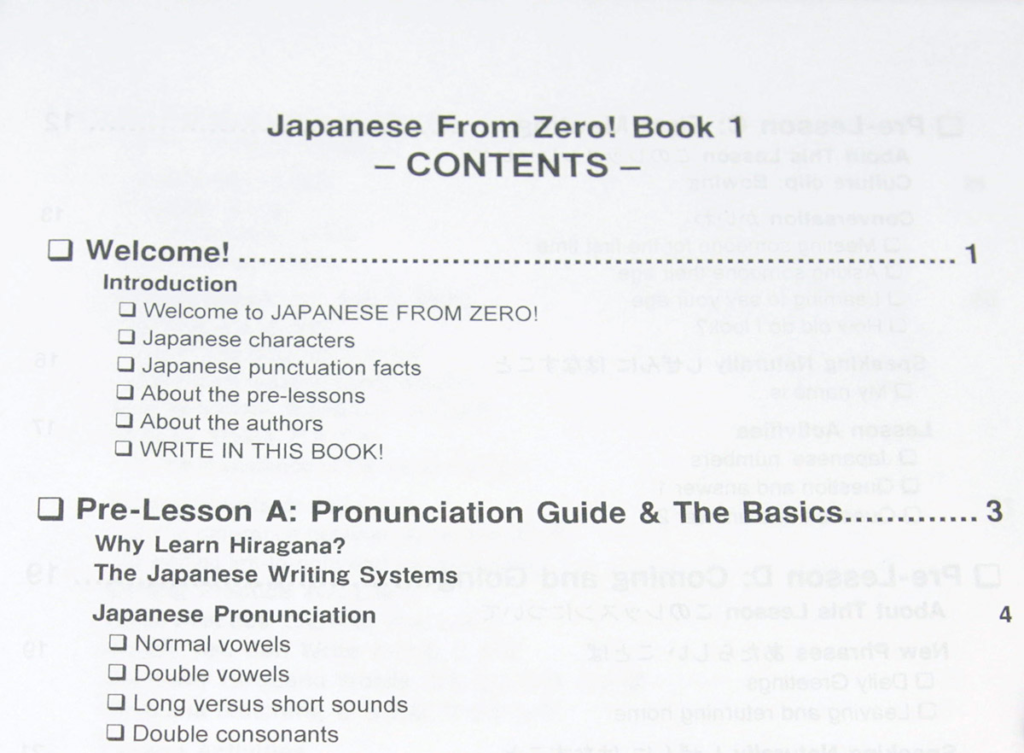
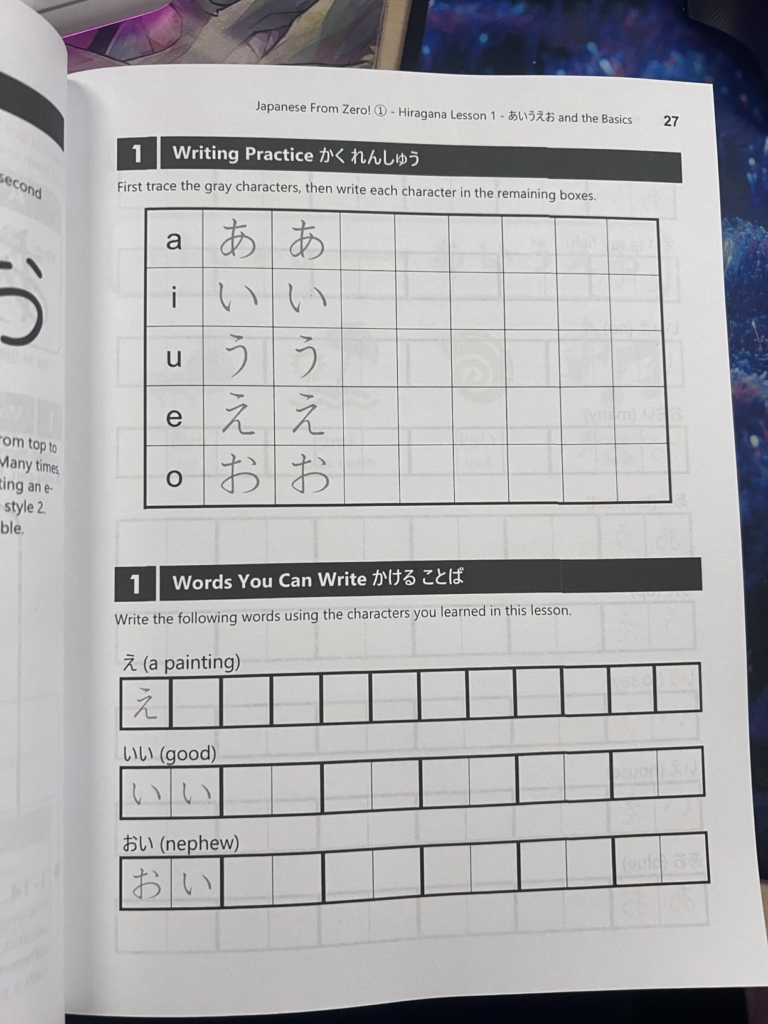
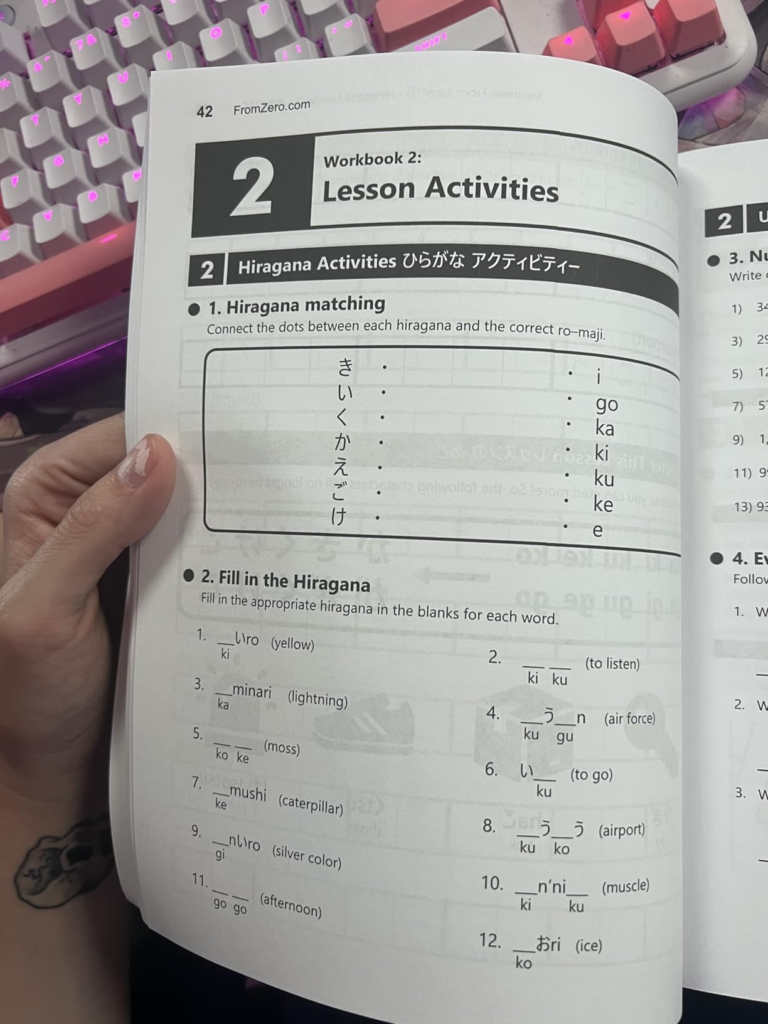
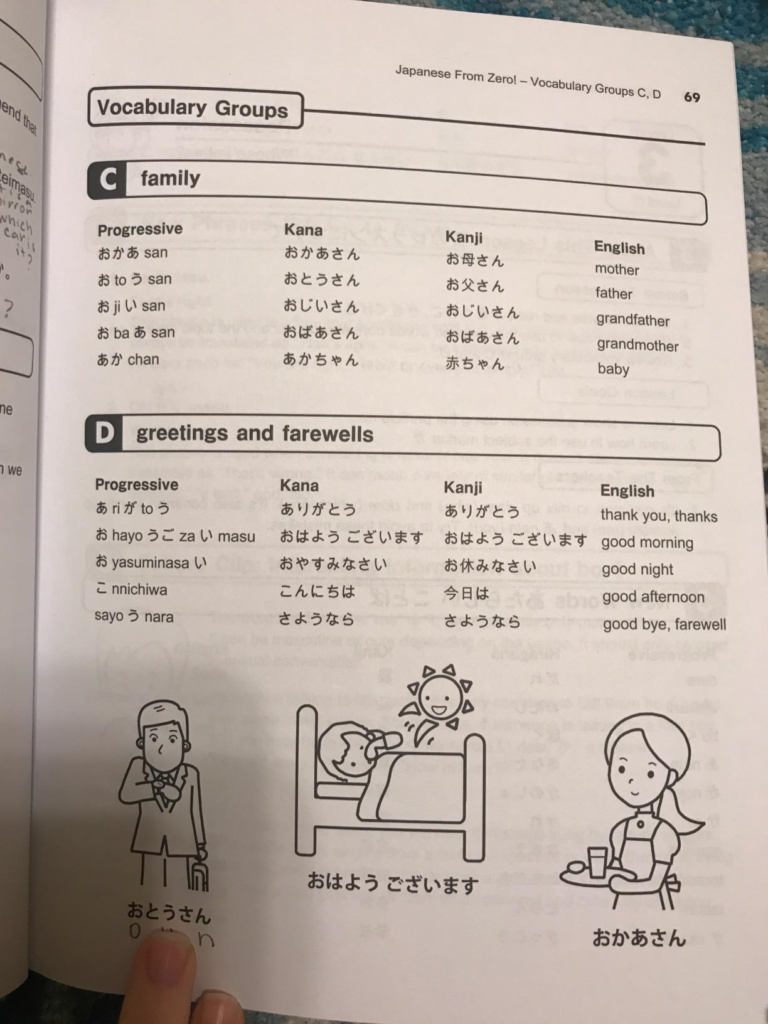
This isn’t just a grammar reference — it’s a full course built for people learning entirely on their own:
- Hiragana taught progressively. Instead of forcing you to memorize all 46 hiragana characters before lesson one, the book introduces a handful per chapter and slowly phases out romaji as you go. By the end of the book, you’re reading in hiragana without realizing how you got there.
- 800+ new words and expressions, taught in context rather than as isolated vocab lists.
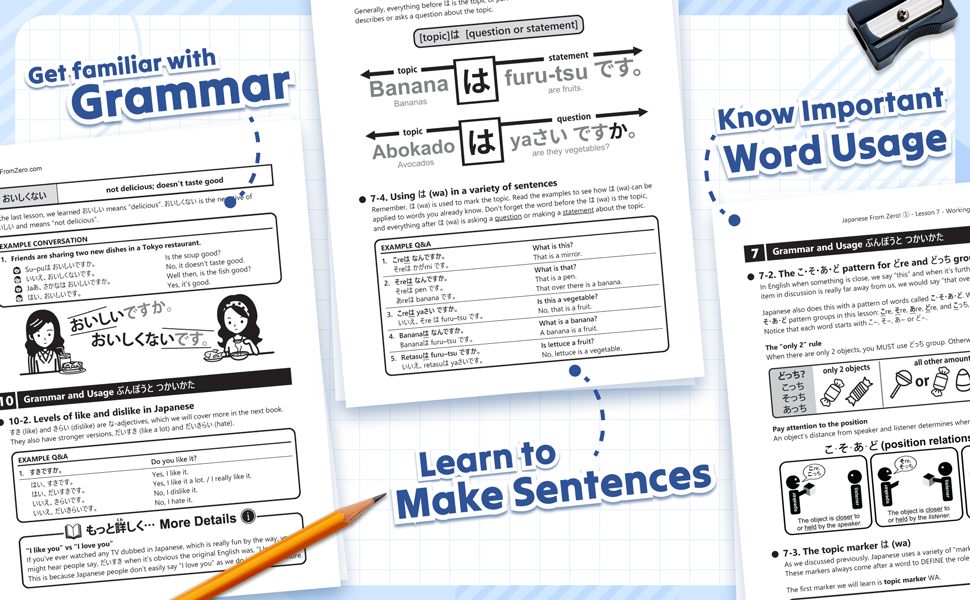
- An integrated workbook with an answer key, so you’re never stuck wondering if you got something right.
- Example dialogues written the way people actually speak, not stiff textbook Japanese.
- Short culture notes scattered through the chapters — useful context, though basic if you already know Japan well.
- Bilingual glossaries with kana and romaji side by side.
- A free YouTube companion series, with George Trombley walking through nearly every lesson. For self-studiers, this is arguably the book’s single biggest advantage — it’s the closest thing to having a teacher without paying for one.
The Progressive Method: Genius or Too Slow?
This is the most debated part of the entire series, so it deserves its own section.
The “progressive” approach — easing in hiragana and grammar gradually — is exactly why beginners with no language-learning background tend to stick with this book rather than quitting halfway through, which is a real and common problem with denser textbooks. It removes the early overwhelm that makes a lot of people give up on Japanese in the first month.
The trade-off: verbs aren’t introduced until very late in the book, and you’ll spend a good chunk of your time on vocabulary, numbers, colors, and question words before you’re building real sentences. If you’re the type of learner who wants to see grammatical structure early and reason your way through a language analytically, this pacing can feel frustratingly slow.
Neither approach is “wrong” — it depends entirely on whether you’re someone who needs momentum and small wins to stay motivated, or someone who wants depth and structure from day one.
Pros
- Genuinely beginner-friendly — built for people who have never touched Japanese
- Free, lesson-matched video series adds real teacher-style guidance
- Workbook + answer key means you can self-check everything
- Conversational, jargon-light explanations
- High completion rate — this is the textbook people actually finish, where others get abandoned on a shelf
- Strong, supportive online community around the YesJapan/From Zero brand
Cons
- Slower pace means less ground covered per book than competitors like Genki
- Verbs introduced late, which some learners find counterproductive
- Adult learners with prior language study sometimes find the tone a bit juvenile
- Book 1 alone will not get you fully ready for the JLPT N5 — you’ll need to continue the series
- The cartoon-style cover and layout can feel aimed at younger students, even though the content works for any age
Japanese From Zero vs. Genki vs. Minna no Nihongo
| Japanese From Zero! 1 | Genki I | Minna no Nihongo | |
|---|---|---|---|
| Best for | Total beginners, self-study | Structured learners, some classroom use | Immersion-style classroom learners |
| Hiragana approach | Gradual, chapter by chapter | Expected early/quickly | Expected before starting |
| Self-study friendliness | Very high (video series included) | Moderate (benefits from a teacher) | Low (designed for in-person courses) |
| Pace | Slow and gentle | Fast, university-level | Fast, immersion-style |
| Explanations | Conversational, English-heavy | Academic but clear | Entirely in Japanese |
| Books needed to reach ~N4 | 4–5 in the series | 2 books | 2 books (with separate grammar guides) |
If your priority is not quitting, Japanese From Zero wins. If your priority is speed and exam efficiency, Genki or Minna no Nihongo will get you there faster — provided you don’t burn out first.
How Long Does It Take to Finish Book 1?
Studying consistently for 30–45 minutes a day, most learners finish Book 1 in 6 to 10 weeks. Going through it casually on weekends only, expect closer to 3 to 4 months. The book itself isn’t long — what extends the timeline is the workbook practice and rewatching video lessons, which I’d actually encourage rather than rush through.
Will Book 1 Prepare You for the JLPT N5?
Honestly — no, not on its own. Book 1 lays the foundation (basic hiragana, core vocabulary, simple sentence patterns), but full N5 coverage requires continuing through at least Book 2, and many learners go through Book 3 or the dedicated Kanji volume before sitting the exam. Think of Book 1 as the on-ramp, not the destination.
A Tutor’s Tips for Getting the Most Out of This Book
- Don’t skip the workbook pages — passive reading without writing practice is the #1 reason self-studiers plateau.
- Watch the matching YouTube lesson before, not after you read each chapter — it primes you for what’s coming.
- Say sentences out loud, even alone. Reading silently won’t build the speaking reflex you’ll eventually need.
- Don’t rely on romaji longer than the book does. It’s tempting to keep using it as a crutch, but the gradual hiragana system only works if you let it.
- If you finish Book 1 and feel like progress is too slow, that’s actually a normal signal to move to Book 2 rather than re-reading Book 1 — momentum matters more than perfection at this stage.
Final Verdict
For a true beginner with no prior language background, Japanese From Zero! Book 1 remains one of the most accessible entry points into Japanese available right now — the gentle pacing and free video support solve the exact problem that causes most self-taught learners to quit. If you’ve already got some experience with language learning and want speed over comfort, you may find it slow going and want to start with Genki instead.
If that sounds like the right fit, here’s where to grab it:
View Japanese From Zero! Book 1 on Amazon →
FAQ
Is Japanese From Zero good for adults, or just kids? It works fine for adults — the content and grammar are the same regardless of age. Some adult learners are put off by the cartoon-style illustrations, but the actual teaching method is age-neutral.
Do I need to buy the whole 5-book series, or can I just get Book 1? You can absolutely buy just Book 1 to test whether the teaching style and pace work for you before committing to the rest of the series.
Is there an answer key for the workbook? Yes, the answer key is integrated directly into the book, so you can check your work as you go.
Does Japanese From Zero teach kanji? Book 1 focuses on hiragana, not kanji. Kanji is introduced in later books and in the dedicated Kanji From Zero! volume.
Is the video series really free? Yes — George Trombley’s YouTube channel hosts lesson-matched videos for the series at no cost, which is one of the strongest arguments for choosing this book as a self-studier.
How is this different from Genki? Japanese From Zero is paced more gently and built specifically for self-study, while Genki moves faster and is closer to a university-course curriculum that often assumes some teacher guidance.