
Skip to content
-
Subscribe to our newsletter & never miss our best posts. Subscribe Now!
Reading Japanese with Fumito フミト Logo Reading Japanese with Fumito フミト

Read Japanese Like Your Favorite Anime Hero – With Fumito フミト!

Reading Japanese with Fumito フミト Logo Reading Japanese with Fumito フミト

Read Japanese Like Your Favorite Anime Hero – With Fumito フミト!

  • Home
  • About Me
  • Contact Fumito フミト
  • Blog
  • Privacy Policy
  • Terms and Conditions
  • Disclaimer 
  • Resources
  • Start Reading
    • Hiragana Guide
    • Katakana Guide
    • Vocabulary
    • JLPT N5 Reading
  • Home
  • About Me
  • Contact Fumito フミト
  • Blog
  • Privacy Policy
  • Terms and Conditions
  • Disclaimer 
  • Resources
  • Start Reading
    • Hiragana Guide
    • Katakana Guide
    • Vocabulary
    • JLPT N5 Reading
Close

Search

  • https://www.facebook.com/
  • https://twitter.com/
  • https://t.me/
  • https://www.instagram.com/
  • https://youtube.com/
Subscribe
Japanese Numbers 1 to 9 | Learn Counting in Japanese
Start Reading

Japanese Numbers 1 to 9 | Learn Counting in Japanese

By Fumito Emi
May 12, 2026 2 Min Read
0

Hello dorsok! My name is Fumito Emi, Japanese language tutor. Today I explain very simple but very important topic: how to say numbers 1 to 9 in Japanese. Many students ask me, “Sensei, how to count in Japanese?” So let’s study together.

What is 1 2 3 4 5 6 7 8 9 in Japanese?

Discover how to say 1 2 3 4 5 6 7 8 9 in Japanese with tutor Fumito Emi. Learn the correct readings (ichi, ni, san, yon, go, roku, nana, hachi, kyū) and cultural meanings. Practice with counters and explore more lessons at reading-japanese.com.

How to say Japanese Numbers 1 to 9
What is 1 2 3 4 5 6 7 8 9 in Japanese?

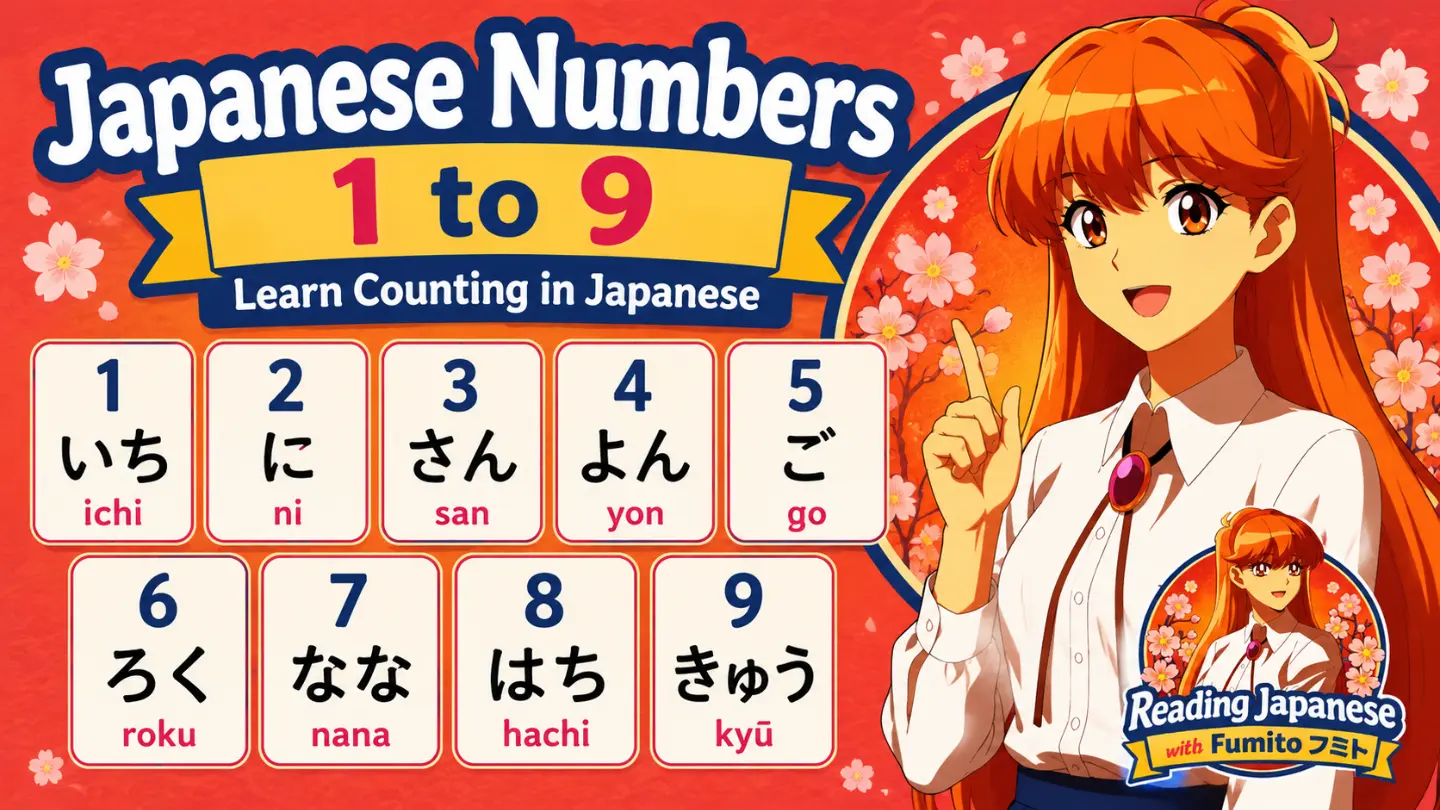
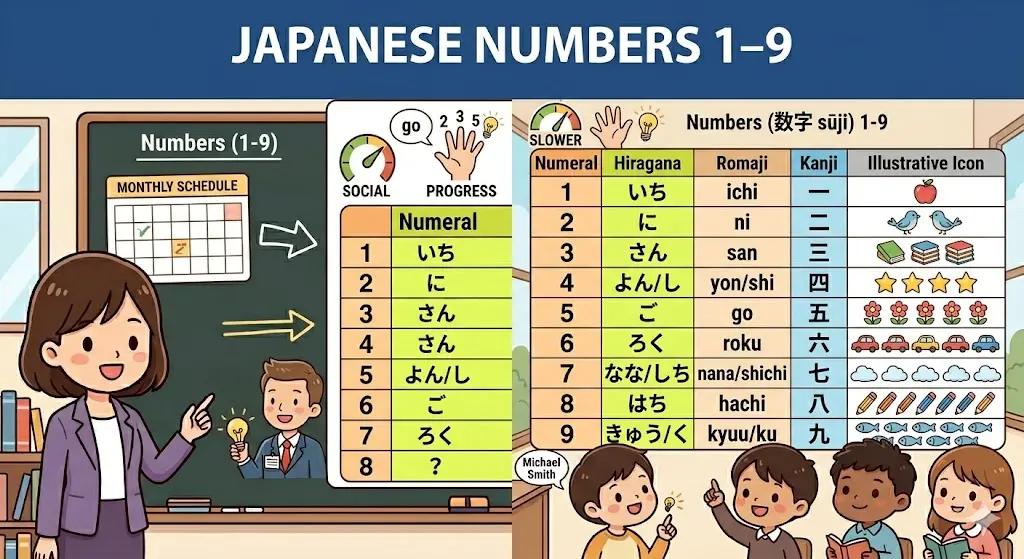
In Japanese, numbers are called sūji (数字). Here is how we say them:

  • 1 = ichi (いち)
  • 2 = ni (に)
  • 3 = san (さん)
  • 4 = yon (よん) or shi (し)
  • 5 = go (ご)
  • 6 = roku (ろく)
  • 7 = nana (なな) or shichi (しち)
  • 8 = hachi (はち)
  • 9 = kyū (きゅう) or ku (く)

👉 For more practice, please check my lesson on Japanese counting basics.

Why Two Ways for 4, 7, and 9?

Maybe you notice: some numbers have two readings. For example, 4 can be yon or shi. This is because of Japanese history and Chinese influence. But in daily life, we usually use yon, nana, and kyū because the other readings sometimes sound unlucky. For example, shi also means “death” in Japanese. That is why people prefer yon.

If you want to learn more about cultural meaning of numbers, read my article Japanese superstitions with numbers.

How to Use Numbers in Daily Life
How to Count in Japanese (1 to 9)

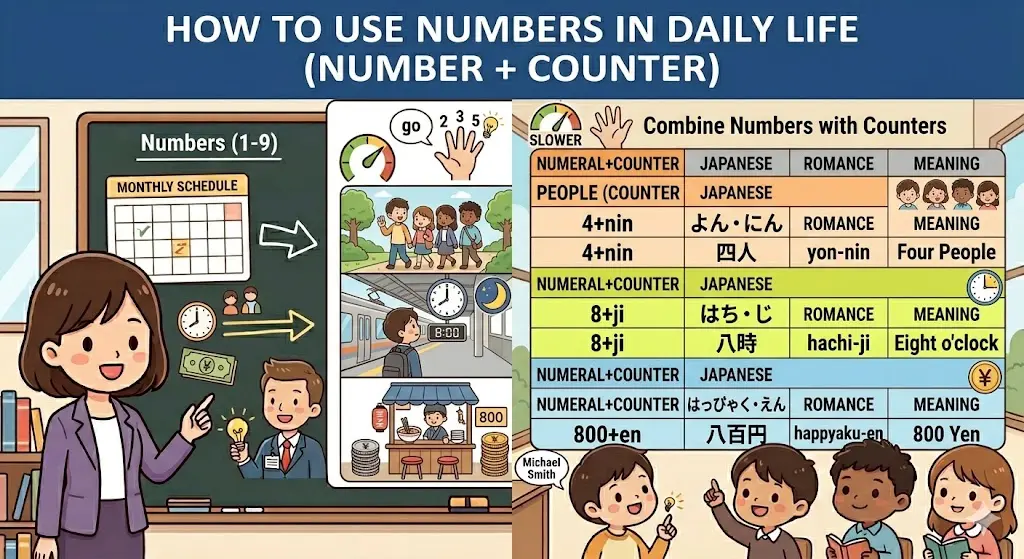
Numbers are everywhere: phone numbers, age, money, time. In Japanese, we combine numbers with counters. For example:

  • san-nin (三人) = three people
  • roku-ji (六時) = six o’clock
  • hachi-en (八円) = eight yen

Counters are a little difficult, but don’t worry. I explain them step by step in my guide Japanese counters explained (reading-japanese.com).

  • Japanese numbers (outlink: Japanese numbers explained)
  • Learn Japanese counting (outlink: Learn Japanese numbers (tofugu.com in Bing))
  • Japanese language basics (outlink: Basics of Japanese language)

These links give extra resources, but my main lessons are always on reading-japanese.com.

Conclusion

So dorsok, now you know how to say 1 to 9 in Japanese: ichi, ni, san, yon, go, roku, nana, hachi, kyū. Easy, right? Practice every day, and soon you can count without thinking. If you want more lessons, please subscribe to my blog reading-japanese.com. Let’s study together and make Japanese language fun!

  • How to Learn Japanese Through Anime Without Feeling Overwhelmed 
  • When to Start Learning Kanji (and Why Sooner Is Better)
  • How to Construct a Japanese Sentence
  • How to learn Japanese FAST? Tips from a native speaker 🇯🇵📚✨🌎✈️
  • What books to buy if you wanna learn japanese language 📚
Author

Fumito Emi

Hi, I’m Fumito フミト Let me help you be confident in Japanese☺️ 🇯🇵 Learn Japanese daily 📘 Free Kanji PDF ↓ 🎧 Free audiobook trial 🎓 Speak with native tutors 👇 Start here reading-japanese.com

Follow Me
Other Articles
Free Hiragana Practice Sheets Printable – Worksheets, Tracing & Stroke Order
Previous

Free Hiragana Practice Sheets Printable – Worksheets, Tracing & Stroke Order

How do you say what should I do in Japanese?
Next

How do you say “what should I do” in Japanese?

No Comment! Be the first one.

    Leave a Reply Cancel reply

    Your email address will not be published. Required fields are marked *

    Learning Japanese Workbook for Beginners: Hiragana Katakana And Kanji - Quick and Easy Way to Learn the Basic Japanese Up-to 300 Pages (EXPANDED EDITION)
    Fumito Emi
    Fumito Emi Image

    Hi, I’m Fumito フミト, your friendly guide to mastering Japanese through reading! I blend my passion for anime, daily life Japanese, and digital teaching to make language learning fun and effective for absolute beginners. Follow My social Media for daily updates.

    Book is bigger than expected but it's easy to follow and provides a good fundamental foundation. Good for beginners along with other reference materials.
    • Facebook
    • Instagram
    • TikTok
    • YouTube
    • Threads
    • X
    • Reddit
    • Pinterest

    Recent Posts

    • How to Learn Japanese Through Anime Without Feeling Overwhelmed 
    • When to Start Learning Kanji (and Why Sooner Is Better)
    • How to Construct a Japanese Sentence
    • How to learn Japanese FAST? Tips from a native speaker 🇯🇵📚✨🌎✈️
    • What books to buy if you wanna learn japanese language 📚

    Archives

    • October 2026
    • September 2026
    • August 2026
    • July 2026
    • June 2026
    • May 2026
    • April 2026

    Categories

    • Blog
    • Hiragana Guide
    • How to Say
    • JLPT N5 Reading
    • Katakana Guide
    • Resources
    • Start Reading
    • Vocabulary
    • About Me
    • Contact Fumito フミト
    • Disclaimer 
    • Privacy Policy
    • Terms and Conditions
    • The Best Japanese Sentence Builder 2026 By Fumito フミト
    Copyright 2026 — Reading Japanese with Fumito フミト. All rights reserved. Blogsy WordPress Theme