
I will confess something first. I am tutor of Japanese language, not tutor of Japanese crafts. So why Fumito is writing about braiding cord on a wooden stand? Because my student, lovely lady from Ontario studying for JLPT N4, sent me photo of her marudai stand last spring and asked, “Sensei, is this word in your vocabulary lists?” I say to her, “Kumihimo is not on my flashcards, but it is very much part of Japanese heart.” Then I fall down small rabbit hole of research, and now I cannot stop making braids at my desk between grading essays. My wife thinks I have midlife crisis with string.
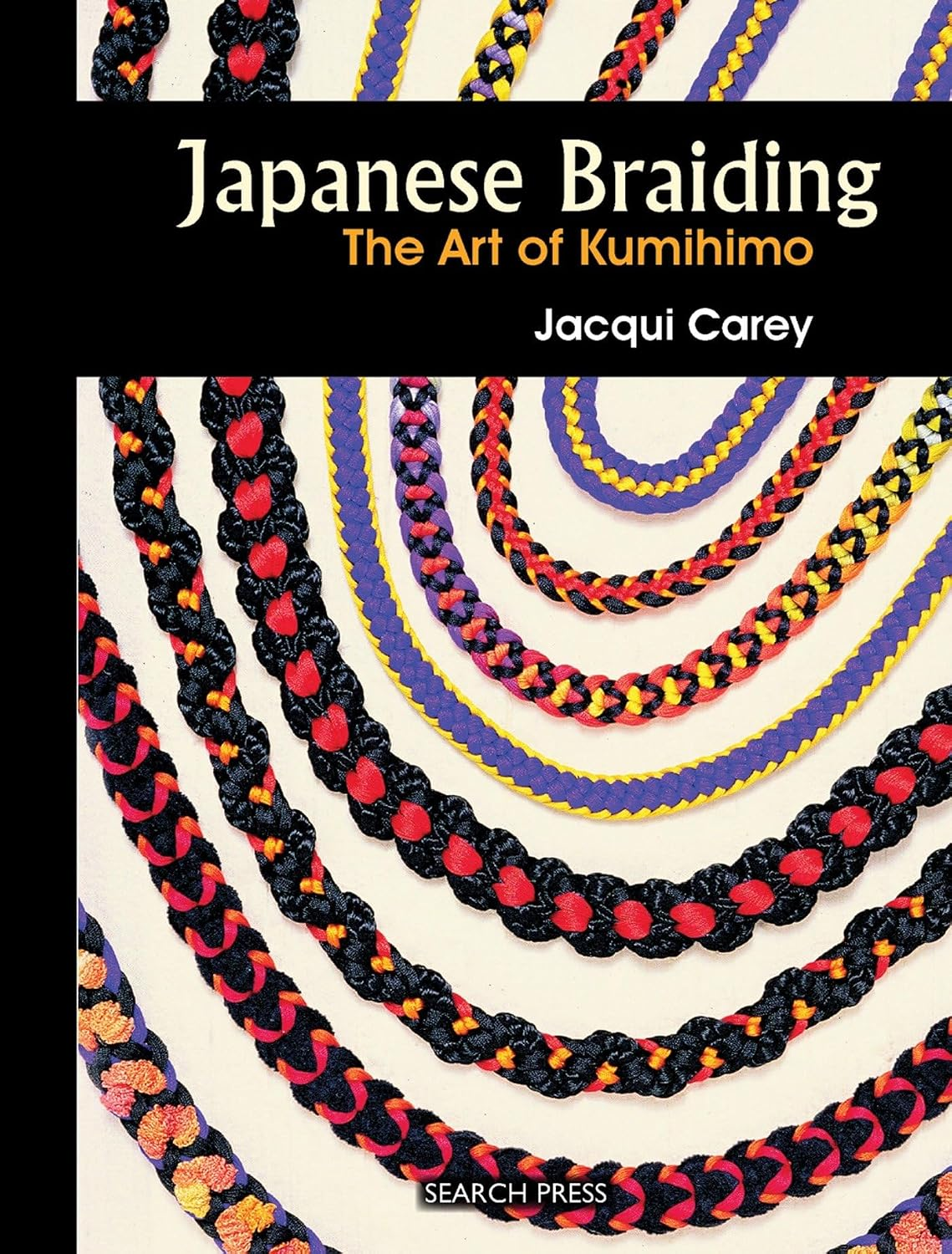
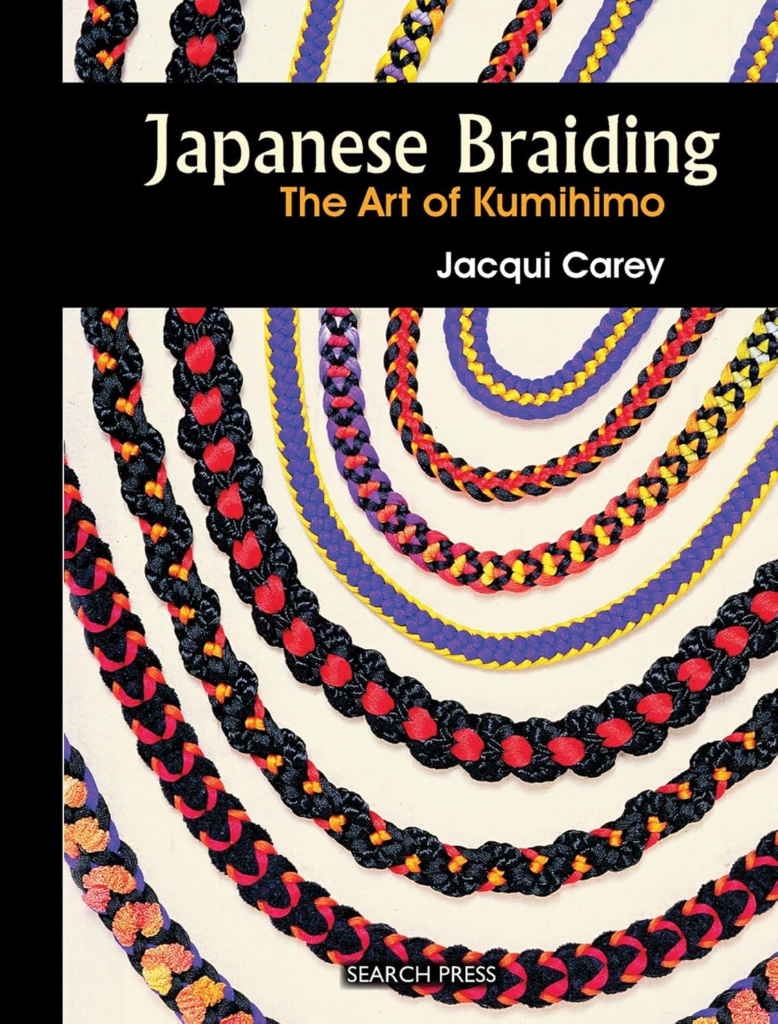
So today I review book that many kumihimo teachers recommend to absolute beginner who wants to learn on marudai (round braiding stand), not on foam disk you buy at craft store. Book is called Japanese Braiding: The Art of Kumihimo by Jacqui Carey, published by Search Press.
What is Kumihimo and Marudai, for Those Who Do Not Know (Like Me Two Months Ago)
Kumihimo (組み紐) mean literally “gathered thread” or “braided cord.” It is centuries-old Japanese technique for making decorative and functional cords — used historically for tying samurai armor, decorating swords, and finishing kimono obi. Very elegant, very meditative. Marudai (丸台) is the round wooden stand with hole in middle where you sit and weave threads over and around like little dance of bobbins.
Many people today learn kumihimo on flat foam disk, which is fine and cheap way to start. But marudai is the traditional, “real” way, and it opens door to more complex and beautiful braid structures that disk simply cannot do. If you want to say you truly learn kumihimo on the marudai, eventually you must sit at proper stand.
This is where Jacqui Carey’s book earns its keep.
About the Book and the Author
Jacqui Carey is not casual hobbyist who write one book and disappear. She has spent decades specializing in kumihimo, and this particular title has interesting history — it was first published in 1997 under name Beginner’s Guide to Braiding: The Craft of Kumihimo, then reprinted in 2009 by Search Press with new spiral binding (very smart choice, book lies flat on table while your hands are busy with cords, no fighting with pages).
Quick specs, for people like me who always scroll to bottom of Amazon listing first:
- Author: Jacqui Carey
- Publisher: Search Press
- Format: Spiral-bound paperback, 96 pages
- Publication date: August 2009 (this edition)
- ISBN-13: 978-1844484263
Book has earned praise from actual weaving publications, not just random internet strangers. Journal for Weavers, Spinners & Dyers called it excellent introduction that let reader explore further with confidence, and West Country Embroiderer’s praised the clear step-by-step photos and straightforward equipment descriptions — including homemade alternatives for those not ready to buy full traditional setup yet.
What Is Actually Inside
Book walks you through, in very sensible order:
- Materials and equipment — what marudai is, what thread type to buy, how to make simple homemade version if you are not ready to spend money on proper stand (very kind of author, I think, not everyone try to sell you $200 stand on page one)
- Basic set-up — how to mount your bobbins (called tama), how to weight the braid, how to sit and hold your hands correctly
- Square braids — first project, good for building muscle memory of the movement pattern
- Round braids
- Flat braids
- Honeycomb braids
- Hollow braids
All of these use eight-end structure, which is friendly number for true beginner. Photos are full color and genuinely step-by-step, not “here is finished braid, good luck figuring out middle part” like some cheaper books I have seen while researching this article.
What I Like
Honest, uncomplicated teaching voice. Even in English translation of technique (kumihimo terminology can get confusing fast), Carey explain things in plain, patient way. I appreciate this because, as non-native English speaker myself, I know value of writer who does not hide behind fancy vocabulary.
Spiral binding is genius, actually. You will be using both hands constantly. Book that closes itself on you while you braid is enemy, not friend. This spiral edition solve that small but very real problem.
Real marudai instruction, not disk-only content disguised as “kumihimo for beginners.” Many modern kumihimo books lean heavily on the foam disk because it is more popular with jewelry crafters. This book respects that you specifically want to learn kumihimo on the marudai, the traditional way, and does not waste your pages on disk projects.
Homemade equipment tips. If you are not sure kumihimo will become lifelong hobby (like it apparently has for me), author gives ideas for improvised stand before you commit to real one.
What I Do Not Like So Much
Only 96 pages, six braid types. If you fall in love with this craft — and many people do, it is strangely calming — you will finish this book quickly and need second book for more advanced patterns. Think of this as excellent Chapter One of your kumihimo life, not entire textbook.
No marudai stand included, obviously. This sounds silly to say, but I want to be clear for beginner: you will need to purchase separate marudai stand and thread bobbins to actually do projects in this book. Author gives some homemade options, but budget for this before you buy.
Slightly dated photography style. Book has been reprinted since 1997 original, and while photos are clear, they do not have the glossy Pinterest-style polish of newer craft books. This bothered me for approximately zero minutes once I started actually braiding, but I mention it for people who care about aesthetics.
How It Compares to Other Popular Kumihimo Books
| Book | Focus | Best For |
|---|---|---|
| Japanese Braiding: The Art of Kumihimo (Jacqui Carey) | Traditional marudai technique, 6 braid types | Beginners who specifically want authentic marudai instruction |
| The Beginner’s Guide to Kumihimo (Dorothy Wood) | Foam disk technique, jewelry projects | Beginners interested in beaded jewelry, not marudai |
| Kumihimo Basics and Beyond (Rebecca Ann Combs) | Disk-based, 24 jewelry projects | Crafters wanting many quick project ideas |
If your goal is genuinely to learn kumihimo on the marudai, first book on this table is the one built for that job. Other two are good books, but they answer different question.
Who Should Buy This Book
- Complete beginner who want to start with marudai, not disk
- Person who like calm, meditative hobby (kumihimo rhythm is honestly very good for anxious mind, I notice this myself during stressful grading season)
- Someone who already own or is planning to buy marudai stand and wants trustworthy, well-reviewed instruction book to go with it
- Fan of Japanese traditional crafts who want hands-on complement to language and culture study
Who Should Skip It
- People who only want foam-disk jewelry projects (get Dorothy Wood’s book instead)
- Advanced kumihimo braiders wanting complex or unusual braid structures — this is beginner book, title does not lie
Frequently Asked Questions
Can I learn kumihimo without a marudai? Yes, many beginners start with flat foam disk, which is cheaper and needs no stand. But if you want traditional experience and access to certain complex braid types, marudai is the classic tool, and this book teaches you properly on it.
Do I need to buy a marudai separately? Yes. This book does not come with equipment. It does, however, give instructions for simple homemade stand if you want to test the hobby before investing in proper one.
Is this book good for absolute beginners? Very much yes. It is specifically written for beginner, with slow, clear explanation of set-up and technique from the very first page.
How long does it take to learn kumihimo on the marudai from this book? Basic square braid, most people can produce recognizable result within first sitting or two. Comfort and speed with the rhythm usually come after few weeks of regular short practice sessions — twenty minutes here and there adds up nicely.
Is kumihimo related to Japanese language study? Not directly for grammar or vocabulary, but I always tell my students that hands-on cultural hobbies like kumihimo, calligraphy, or origami deepen your feeling for Japanese aesthetics and patience — qualities that help language learning too, in my humble opinion.
Final Verdict
For anyone serious about wanting to learn kumihimo on the marudai the proper, traditional way, Jacqui Carey’s book is trustworthy and time-tested starting point. It will not teach you everything forever, but it will teach you correctly, which matter more in my opinion. I am, admittedly, terrible at braiding still — my square braid look more like slightly drunk square — but book is not to blame for my clumsy fingers.
If you enjoy exploring Japanese culture beyond the language itself, you may also like my article on Japanese Vocabulary QuickStudy Guide Review And if you are here studying for JLPT between braiding sessions, do not forget to check my JLPT N5 study checklist.