
My name is Fumito, a Japanese language tutor living in Japan and the creator of reading-japanese.com.
For many years I have been teaching Japanese to students from Bangladesh, and I often get this same question:
“Sensei, what is the best Japanese language school in Bangladesh?”
To be honest, there is no single “perfect” answer. New schools open, teachers change, and each student has different goals. Still, I want to share my personal view and criteria, and introduce some of the notable Japanese language schools and programs in Bangladesh that my students often talk about.
Think of this not as a strict ranking, but as a guide from a teacher who really cares about your Japanese journey.
Before the List: How I Judge a “Good” School
Before looking at any top 10 list, please understand how I think as a tutor.
A good Japanese language school should:
- Teach all four skills: listening, speaking, reading, writing
- Not only chase JLPT results, but also real-life communication
- Use hiragana and katakana early, not depend only on romaji
- Have qualified and experienced teachers, not just “returnees” who went to Japan once
- Give students clear structure: what you will learn in each course level
- Offer honest guidance about study-in-Japan or working in Japan, not just “visa promises”
Many new teachers (and even some schools) make common mistakes like only focusing on exam tricks or translation from Bangla/English, and students later suffer when they actually come to Japan and cannot speak naturally.
Keep these points in your mind while reading my list.
1. BRAC University – Japanese at BRAC Institute of Languages
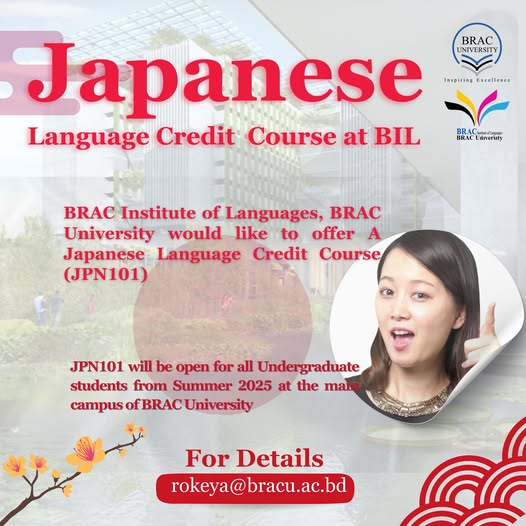
BRAC University offers Japanese language courses through its language institute, and it is often mentioned by serious students who want academic quality and a more structured environment.
Because it is inside a university, the approach is not only “JLPT coaching”, but also culture, communication, and long-term learning. This is good for students who plan to continue higher studies or want a strong foundation, not only a quick certificate.
If you are a college-level student and want Japanese as part of your academic path, this is one of the first places you should check.
Also Read More:
- Japanese Language Proficiency Test N2 Grammar Review: Is New Full Master Grammar Worth It?
- JLPT N5 Exam Pattern Explained: Sections, Timing, Scoring & What to Expect in 2026
- Learn Kumihimo on the Marudai: My Honest Review of “Japanese Braiding” by Jacqui Carey
- Japanese Vocabulary QuickStudy Guide Review
- All-in-One Japanese for Beginners Review: Is This 5-in-1 Book Really Worth Your Money?
2. Pacific Academy (JLPT, NAT, JFT Focus)
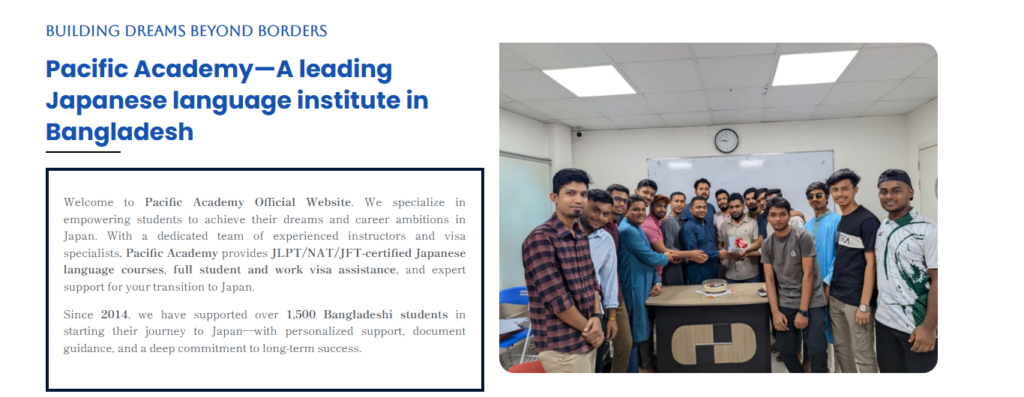
Many Bangladeshi students who contact me have studied or heard about Pacific Academy. They are known for:
- Focus on JLPT, NAT, and JFT-Basic preparation
- Helping students who want to study or work in Japan
- Offering different levels (N5–N2) with exam-oriented teaching
This kind of institute can be very helpful if your main goal is passing Japanese tests for study/work migration.
But, as a tutor, I always tell my students: “Please don’t forget communication. Don’t study only for the test.”
If you study at a place like this, make sure you also practice speaking and listening outside class—movies, dramas, online conversation, etc.
3. Dhaka-Based Private Language Centers
In Dhaka, there are several private language centers that offer Japanese courses, often advertising things like:
- “Japanese in 3 months”
- “Fast-track JLPT N5/N4”
- “Spoken Japanese for Japan visa”
Some of my Bangladeshi students started their journey in such centers. The quality is not equal everywhere, but a few have:
- Small–medium class sizes
- Motivated teachers who really try to support students
- Flexible timing for working people or college students
If you choose this type of center, be careful to ask:
- Who is the main teacher? What is their Japanese level (N2? N1?)
- Is there a clear syllabus (week by week) or just “we will cover N5”?
- Do they use proper Japanese materials, not only homemade Bangla notes?
Don’t be shy. Asking questions before you pay is not rude. It is smart.
4. University Language Institutes (Various)
Besides BRAC, other universities in Bangladesh are slowly adding Japanese as a foreign language elective or offering short courses through their language centers.
These programs can be very good for:
- Getting basic Japanese with some cultural context
- Studying in a more formal academic environment
- Networking with other students who are serious about language learning
The downside can be that schedules are less flexible, and sometimes the pace is slower. But if you are already in university, taking Japanese there plus self-study can be a very powerful combination.
5. Community-Based Japanese Schools and Cultural Centers
There are small Japanese language and cultural centers that might not be “famous” in big rankings, but they create a warm community feeling.
They often organize:
- Language classes in small groups
- Cultural events (festivals, workshops, seminars)
- Sessions with people who have studied or lived in Japan
From a teacher’s view, this community aspect is very important. Many learners quit not because the language is too hard, but because they feel alone. A place where you can connect with other Japanese learners, talk about anime, J-Pop, JLPT struggles, and dreams of living in Japan—this can keep your motivation alive for years.
6. Centers Connected With Study-in-Japan or Work Support
Some institutions in Bangladesh combine:
- Japanese language training
- Study-in-Japan counselling
- Or even Tokutei Ginou / care-worker / factory-job pathways
These places can be helpful if your main goal is migration, but I always warn my students:
“Please check: are they teaching real Japanese, or only basic phrases plus paperwork?”
A good center will:
- Have serious language classes, not just “visa coaching”
- Be clear about what they can and cannot guarantee
- Show you real data, not only big promises
As a tutor in Japan, I have seen students who arrived here with a certificate but almost no communication skill. It is very painful for them. Please don’t let that happen to you.
7. Facebook-Based Japanese Language Pages and Groups
In Bangladesh, Facebook is like a second internet. Many small Japanese language schools, tutors, and study-in-Japan communities are active there.
You can use Facebook to:
- Discover new or lesser-known schools
- Read reviews and comments from ex-students
- Join groups where Bangladeshi learners share resources
However, be careful: social media is full of advertising language.
Look for:
- Detailed posts about class content, not only “Best school! Limited seat!”
- Real student feedback, not only screenshots that are easy to fake
- How they answer questions in comments—do they sound honest and professional?
8. Online Classes With Japanese or Native-Level Teachers
Recently, many Bangladeshi learners are taking online classes with teachers based in Japan or other countries. Some of my own students started in Bangladesh and then continued with me online.
Online lessons can:
- Give you exposure to natural Japanese pronunciation
- Allow you to practice real conversation regularly
- Be flexible with time, especially if you work or study full-time
One smart strategy is:
- Learn basic grammar, reading, and writing at a local school
- Use online one-to-one or small group lessons to polish speaking and listening
In this way, you get the best of both worlds.
9. Short Intensive Courses and Bootcamps
Some centers and universities offer short intensive Japanese courses, like 4–8 week programs.
These are useful if:
- You want to test your interest in Japanese before committing long-term
- You need a quick foundation before going to Japan soon
- You enjoy studying in a very focused, high-intensity way
But don’t expect to become “fluent” in a few weeks.
A short course should be your starting point, not your finish line. After it ends, you still need regular practice and probably a more advanced course.
10. Self-Study + Any Decent Local School
This last one may surprise you:
One of the most powerful “schools” is a combination of:
- Any decent local Japanese class (not perfect, but okay)
- Plus your own consistent self-study using textbooks, apps, online resources, and content like my site reading-japanese.com
Some students feel they must find the “No.1 school in Bangladesh” before they start. They spend months just searching, comparing, asking in groups.
But the truth is:
A good enough school + strong personal effort often beats
a “famous” school + lazy student.
If your teacher gives you basic structure and checks your mistakes, and you take responsibility for listening, reading, and review every day, you will go very far—no matter if the school is “top 3” or “top 30”.
There is now a specific government-driven “Japanese language (N5 & N4) hybrid model” program running through public Technical Training Centers (TTCs) under the Ministry/BOESL/related agencies in Bangladesh. These are the ones you should treat as govt-approved options rather than private institutes claiming government links.
Bangladesh-Korea Technical Training Center (BKTTC), Dhaka
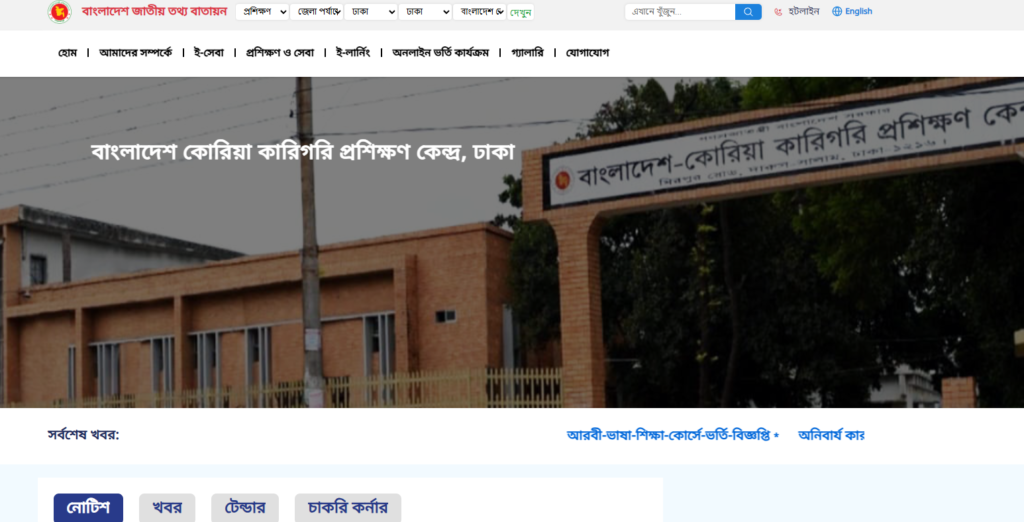
- BKTTC is running Japanese language courses N5 & N4 in hybrid mode (online + offline).
- Official notice mentions “Hybrid Model Japanese Language (Level N5 & N4)” with structured batch and seat plan, clearly under the government TVET system.
- This is one of the main government technical centers regularly offering Japanese language courses.
Bangladesh-German Technical Training Center (BG-TTC)
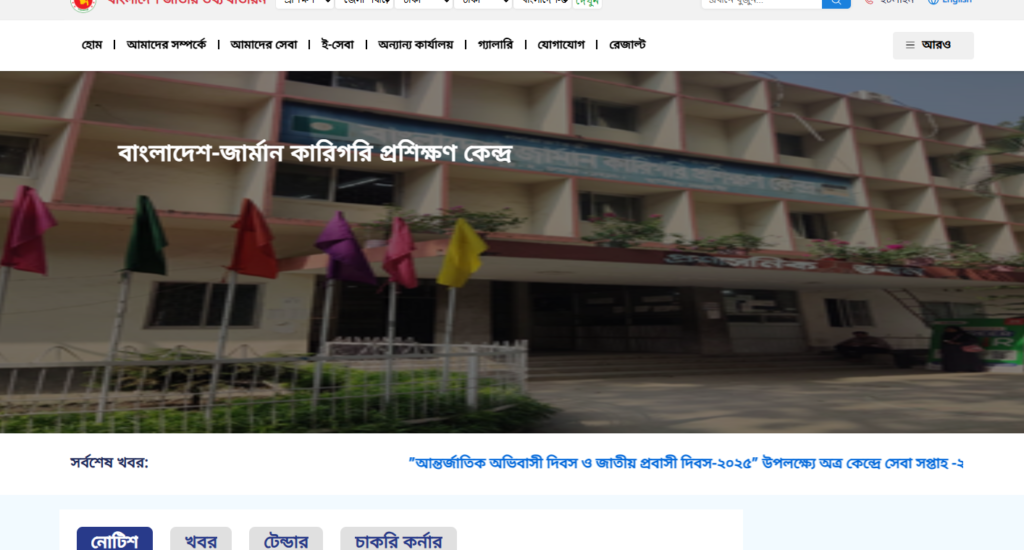
- Separate admission circular invites trainees for Japanese Language Course N5 & N4, under BGTTC, clearly described as a formal training course.
- This is also a government technical training center, so the course is considered govt-approved / public sector.
Chapai Nawabganj TTC – Japanese (N5 & N4 Hybrid) Course
- The official TTC site of Chapai Nawabganj has notices about “Japanese Language (N5 & N4 Hybrid) course” with admission going on and deadlines (e.g., 27/04/2026 session).
- That means this TTC is also delivering the government-structured hybrid Japanese course, not just a private initiative.
Other TTCs and Online Govt E‑Learning Platform
- The government E-Learning Center for overseas employment (OEP) lists online Japanese, English, German, etc., under its training umbrella.
- Some other district TTCs share admission info for “Japanese language (N5 & N4 Hybrid)” via Facebook/local pages, but the core pattern is:
- Course name includes “Japanese Language (N5 & N4 Hybrid)”
- Hosted by a Technical Training Center (TTC) under the government skill development system.
So, if you want to list govt-approved hybrid N5/N4 language courses in your content, the safest anchor points (with verifiable notices) are:
- Bangladesh-Korea Technical Training Center (BKTTC), Dhaka – Japanese Language N5 & N4 (Hybrid)
- Bangladesh-German Technical Training Center (BG-TTC) – Japanese Language Course N5 & N4 (Hybrid/structured)
- Chapai Nawabganj TTC – Japanese Language (N5 & N4 Hybrid) Course
- Other district TTCs using the same “Japanese (N5 & N4 Hybrid)” official course pattern and the OEP e-learning platform as support