
I am Fumito, a Japanese language tutor living in Japan and the person behind reading-japanese.com.
Over the years, more and more students from Indonesia have contacted me, asking:
“Sensei, what are the best Japanese language schools in Indonesia?
Are there any free courses from the government, or is everything paid?”
This article is my honest, teacher-side look at:
- How Japanese is taught in Indonesia (big picture)
- Some of the notable paid Japanese language schools / centers
- Where you can find free or low-cost government / public courses, including online support
- And how to choose the right path for your own goal
This is not an official ranking, but a practical guide from a tutor who works with Indonesian learners regularly.
Before the List: How I Look at “Top” Schools in Indonesia
When I judge a Japanese school or program, in any country, I look at:
- Quality of teachers (Japanese level, teaching experience)
- Balance between JLPT focus and real-life communication
- Use of proper hiragana, katakana, and kanji, not only romaji
- Clear course structure (beginner → intermediate → advanced)
- Whether they support learners’ real goals (study in Japan, anime, career, etc.)
In Indonesia, there is one more important dimension:
- Is the course free/public (government or government-related), or
- Is it a paid private language school / institute?
Both can be good, depending on your situation. Let’s look at them.
Free / Government-Related Japanese Learning Options
The Japan Foundation, Jakarta (JF Jakarta) & JF “Minato” Online
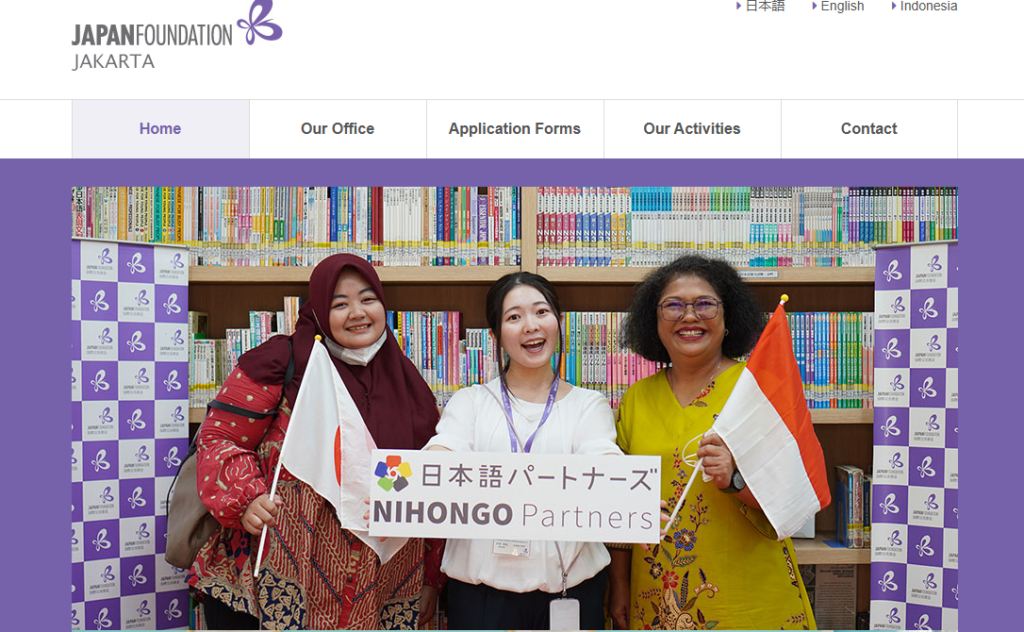
The Japan Foundation, Jakarta (JF Jakarta) is a major hub supporting Japanese language teaching across Indonesia.
They do not function exactly like a typical neighborhood language school, but they:
- Support Japanese teachers and programs nationwide
- Provide access to “JF Japanese e-Learning Minato”, an online platform with many courses, including levels with Indonesian interface and English interface.
- Offer free or low-cost online courses and materials, where you can learn from A1 (beginner) and above, “anytime, anywhere”.
For Indonesian learners who cannot afford expensive private schools, Minato is a very powerful, official, structured free/low-cost option to combine with local practice.
Also Read More :
- Japanese Language Proficiency Test N2 Grammar Review: Is New Full Master Grammar Worth It?
- JLPT N5 Exam Pattern Explained: Sections, Timing, Scoring & What to Expect in 2026
- Learn Kumihimo on the Marudai: My Honest Review of “Japanese Braiding” by Jacqui Carey
- Japanese Vocabulary QuickStudy Guide Review
- All-in-One Japanese for Beginners Review: Is This 5-in-1 Book Really Worth Your Money?
Japanese in Public Schools & Universities (Subsidized / Low-Cost)
Across Indonesia, Japanese is widely offered in high schools and universities as a foreign language, often with support from The Japan Foundation and local education authorities.
This means:
- Many students can study basic Japanese as part of the normal curriculum, without extra tuition
- Some universities have Japanese departments or Japanese language majors, with relatively low public tuition compared to private language schools
If you are a junior/senior high school or university student, taking full advantage of these classes + self-study + online free resources can give you a serious foundation without paying a private institute.
Local Government & Community Courses (Occasional Free Programs)
In different regions, you may find free or subsidized Japanese classes offered through:
- Local government training centers
- Community centers
- Collaboration projects between Indonesian institutions and Japanese organizations
These usually:
- Run for a fixed period
- Focus on basic level (beginner / JLPT N5-style)
- Provide a certificate of participation rather than a big official JLPT certificate
Because they are often short-term projects, you need to watch local announcements from city/provincial education offices, Japanese cultural events, and JF Jakarta’s outreach activities.
Paid Japanese Language Schools & Institutes in Indonesia
Now let’s move to paid private options.
There are many Japanese courses all over Indonesia, especially around Jakarta, Bekasi, Bandung, Surabaya, and other major cities. Below are some typical examples and categories, based on public info and common mentions from learners.
Sakura Japanese Learning Center (SakuraJLC)
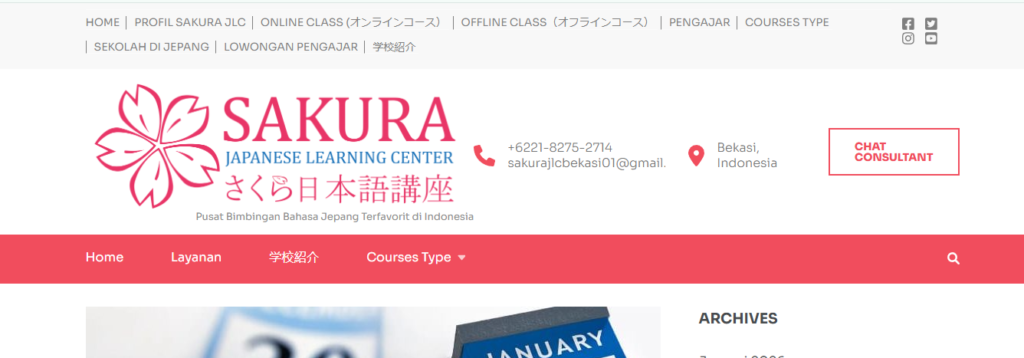
One of the frequently mentioned private schools is Sakura Japanese Learning Center (SakuraJLC), established in Bekasi/Jakarta area.
It is known for:
- Focusing on JLPT preparation and general Japanese courses
- Offering classes from beginner to higher levels
- Being a specialized Japanese-only center, not a “teach every language” place
Students who want structured classes with a clear level system and are okay with paying regular tuition often consider centers like this.
Other Private Japanese Courses in Jakarta & Big Cities
There are many private Japanese schools and course providers around Jakarta and other large cities, sometimes introduced through blogs, forums, or word-of-mouth.
Common features:
- Multiple levels: Beginner (N5-type) up to Intermediate (N3/N2)
- Option for group classes and sometimes private lessons
- Focus on JLPT, conversation, or preparation for study/work in Japan
When choosing among these, you should carefully check:
- Teacher qualifications (do they have JLPT N2/N1? Have they lived in Japan?)
- Class size
- Balance between grammar explanation and real speaking/listening practice
Online Paid Lessons With Tutors (e.g., Platforms)
Some Indonesian learners now prefer online classes with tutors through platforms that list many Japanese teachers.
Advantages:
- You can choose a tutor whose style and accent you like
- Flexible schedule, from Indonesia, without travel time
- Good for people outside big cities who cannot access a physical school
Disadvantages:
- You must be disciplined; nobody will “drag” you to class
- You still need to combine it with reading/writing practice, not only conversation
This can be a great combination with free resources like Minato:
Use Minato for structured content, and online paid tutors for conversation and correction.
Course Providers Linked to Study-in-Japan / Agencies
Some Indonesian agencies that help students go to Japan also run Japanese language courses, sometimes as preparation before departure.
In many cases:
- These are paid courses, sometimes bundled with consulting fees
- The focus is often JLPT N5/N4, enough to enter a Japanese language school or vocational path
- Fees are usually self-funded, and they may quote approximate Japanese school tuition (for example, around 50,000 yen per month in Japan for language schools as a reference).
If you go this route, be sure to ask:
- “Is the language course itself good quality?”
- “What exactly is included in the fee?”
- “What is guaranteed, and what is not?”
Free vs Paid: Which Is Better for You?
As a tutor, here is how I explain it to my Indonesian students:
- Free / government / public options (school, university, Minato, community classes)
- Best if you have limited budget
- Great for building a solid basic level if you are motivated
- Sometimes slower and less flexible in schedule
- Paid private schools and online tutors
- Best if you want faster progress, more intensive practice, or special goals (JLPT N3+, job prep)
- More flexible but also more expensive
- Quality can vary, so you must research carefully
The strongest combination many learners use is:
Public/Free Resources
- Private/Online Lessons
- Self-study (apps, books, anime, websites like reading-japanese.com)
This way, you don’t depend only on one school name.
Common Mistakes Indonesian Learners (and Schools) Make
From my teaching experience with Indonesian students, and watching schools, some common mistakes are:
- Over-focus on textbook and grammar translation, under-focus on actual speaking
- Relying too much on romaji, delaying hiragana/katakana
- Thinking “if I pass JLPT N5, everything will be easy in Japan” (in reality, daily conversation is still hard)
- Schools using Japanese more like a marketing tool for study/work programs rather than seriously teaching the language
If you see a program that only talks about “visa” and “job” but rarely talks about hiragana, katakana, listening practice, and JLPT content, be very careful.
How to Choose Your Own “Top School” in Indonesia
Instead of asking “Which are the absolute top 10 schools?”, ask yourself:
- What is my main goal?
- Pass JLPT? Study in Japan? Enjoy anime without subtitles? Career in a Japanese company?
- What can I realistically invest?
- Only time, or both time and money?
- What style suits me?
- Classroom with many students? One-on-one? Online? Hybrid?
Then, evaluate options using these questions:
- Does this school/course match my goal?
- Do they have teachers with real Japanese proficiency and teaching skill?
- Is there a clear path from my level now to my target level?
As Fumito, My Honest Advice to You
As a Japanese tutor in Japan, I don’t want you to feel stuck just because you cannot join an expensive “Top 10” school.
If you are in Indonesia, you can already:
- Use free JF Minato courses and other online materials to build your base.
- Use school/university Japanese classes seriously (not just for grades).
- If possible, add a good local or online tutor to correct your pronunciation, grammar, and conversation.
A good school or teacher will definitely help, but your daily habits (listening, reading, writing, speaking a little every day) are even more important than any ranking.
Here are some online Japanese course options that work well for learners in Indonesia, with a mix of free/low-cost and paid platforms.
1. JF Japanese e-Learning Minato (Japan Foundation)
2. Cakap – Online Japanese Courses (Indonesia-based)
- Platform: Indonesian online learning app/site.
- Type: Paid, with trial options
- Notes:
3. Nakamura Study Japan – Online Japanese Language Course
- Platform: Live Zoom + Google Classroom.
- Type: Paid
- Notes:
4. JEducation Indonesia – JCenter Japan Online Course
5. Tutor Platforms (e.g., Preply – Japanese Tutors Near Indonesia)
6. Go! Go! Nihon – Online Japanese Courses
Quick comparison table