
Two ways to learn kanji early, and how it makes the rest of your Japanese study easier.
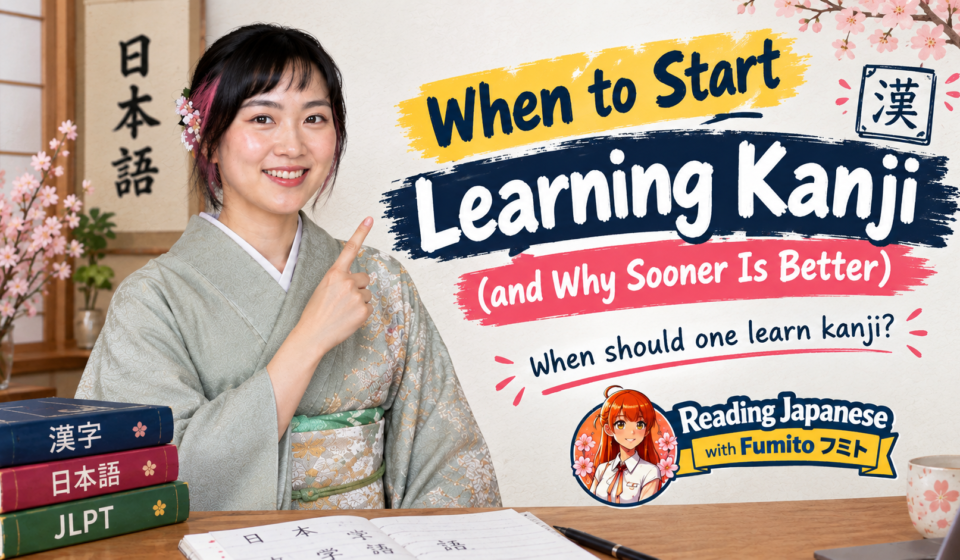
Hi, I’m Fumito Emi, and today I want to answer a question that I get asked a lot: when should you start learning kanji?
I touched on this topic a few times in other posts, and whenever it comes up I always say that it’s best to start learning kanji as soon as possible. Today I want to go into a bit more detail. I will explain exactly when you should start in relation to any other materials you might be using, and how learning kanji early will really benefit you in all other aspects of learning Japanese.
When should one learn kanji?
If you are just getting started, you can also read our JLPT N5 preparation checklist and visit reading-japanese.com for more beginner resources.
Table of Contents
- Two Ways to Learn Kanji
- Why You Shouldn’t Learn Kanji from a Textbook
- Why Starting Early Helps
- How to Get Started
Two Ways to Learn Kanji {#two-ways-to-learn-kanji}
To jump right in, there are two main routes you can take when you are learning kanji.
Method 1: Learn the Meaning Only (No Readings)
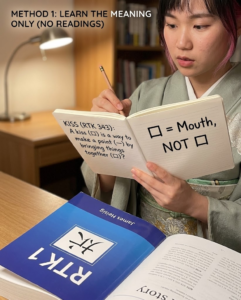
The first method is learning kanji without learning the readings. You only learn to recognize a kanji and know its meaning in English. A popular method in this category is RTK (Remembering the Kanji).
Since these methods don’t require you to learn the on’yomi and kun’yomi readings, you don’t need to know hiragana. So if you decide to do this method, you can start right away, on your very first day of learning Japanese. You don’t have to do anything in advance. You can jump right in.
Method 2: Learn the Kanji and Readings Together
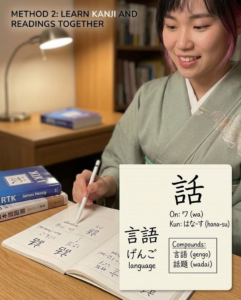
Option number two is learning the kanji and the readings at the same time. This is what I did, using WaniKani.
Since with this method you are learning the readings, you want to know hiragana. The only thing I recommend before starting is a really general understanding of hiragana. All you need is to know how to read a kana chart. You don’t have to have it memorized. You can simply look up characters when you don’t know what they are. With this method, you can also start pretty soon, after a couple of days of getting familiar with hiragana.
Need help with the kana first? Start with our 100 hiragana words and the complete katakana guide.
With either method, you can start learning kanji really early, and I really recommend that you do. You don’t need to know any vocabulary yet. You don’t need a textbook. You don’t need to be learning grammar. You can jump into kanji right away.
Why You Shouldn’t Learn Kanji from a Textbook {#why-not-a-textbook}
I really don’t recommend learning kanji from a textbook, because textbooks introduce kanji pretty slowly, and they pretty much rely on rote memorization, which isn’t the most effective way to memorize something.
I recommend that you use a spaced repetition system (SRS) like RTK or WaniKani instead. Textbooks are really great for reinforcing that kanji knowledge, but I recommend learning kanji for the first time using a separate method.
Looking for tools? See our list of the best kanji learning apps.

Why Starting Early Helps {#why-starting-early-helps}
This point ties into why I recommend starting kanji as soon as possible. It really affects what learning resources you can use, and you will get a lot more out of them if you already know some kanji. Not knowing a lot of kanji will limit your resources, cause a ton of frustration, and kind of stunt your progress.
Vocabulary
With vocabulary, I found it really difficult to learn words that had kanji in them that I hadn’t learned yet. I found it a lot easier to learn the kanji on its own first, and later learn the vocabulary words that use those kanji.
Grammar Textbooks
The same thing happens with grammar textbooks. There will be a lot of kanji in the example sentences, and if you don’t know them, it will get a bit frustrating. When I was going through the second Genki textbook, I really had difficulty because there were so many kanji in it that I hadn’t learned yet. It made the reading passages and the other exercises really frustrating, because I had to look up so many kanji.
Knowing the kanji in a textbook ahead of time, or at least a good chunk of them, makes the process much smoother, and you can focus more on the grammar. See our Japanese grammar lessons for more.
Reading and Immersion
The same goes if you are trying to get into immersion through reading. You will be really limited in what you can read, because normal books have kanji in them. Only children’s books and resources for learners are hiragana-only, so you have a really limited selection. Knowing a lot of kanji means you can jump into reading sooner.
Want to know which kanji to learn first? Read our guides on kanji radicals and the Joyo kanji list.
How to Get Started {#how-to-get-started}
If you’ve just started learning Japanese and you are feeling overwhelmed with all the decisions you have to make, let me make it nice and easy for you. All you have to do to get started:
- Learn hiragana. You don’t need to have it memorized. Just know how to read a kana chart so you can quickly look at it for reference.
- Choose a spaced repetition system for kanji. For example, RTK or WaniKani.
That’s all you need to do. You don’t need to worry about textbooks or vocabulary lists right now. Just focus on that until you build a nice routine and start to feel more comfortable and confident. Then you can start adding more resources.
If you have a learning difficulty and find routines hard, you might also like our guide on learning Japanese with ADHD and dyslexia.
If you found this post useful, share it with a friend who is learning Japanese, and visit reading-japanese.com for more free lessons and resources. That is all for today, and I’ll see you soon!
— Fumito Emi
Related posts