
こんにちは。My name is Fumito Emi, a Japanese teacher and the writer behind Reading-Japanese.com. When students ask me for a small, practical vocabulary reference they can keep beside their notebook, I often suggest looking at laminated guides—not as a complete course, but as a quick support tool.
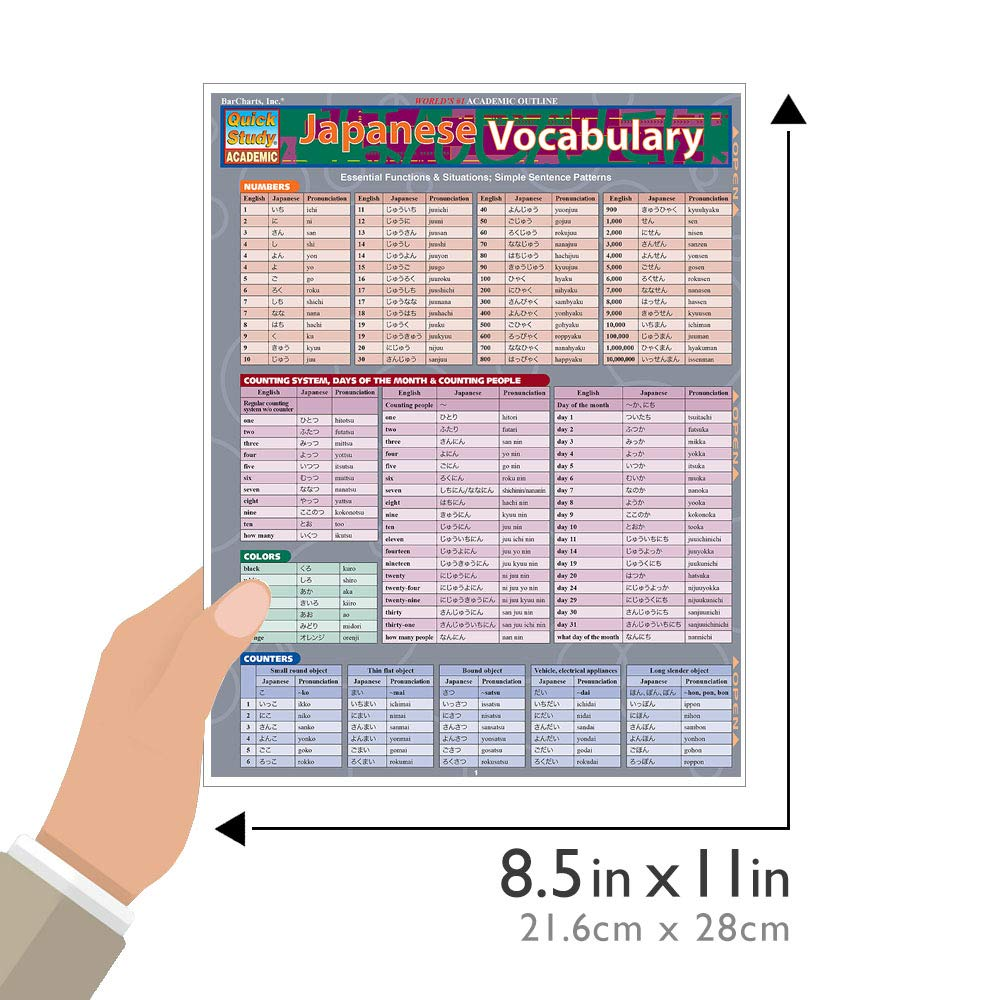
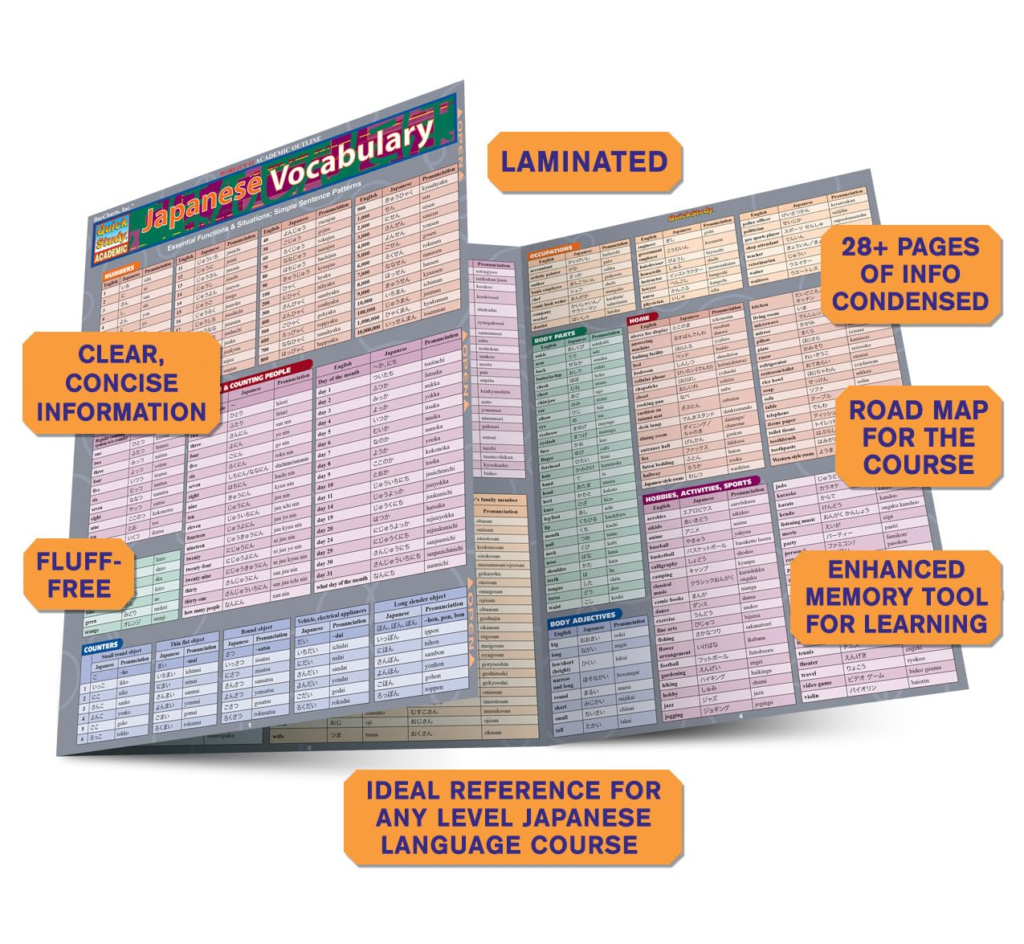
The Japanese Vocabulary: QuickStudy Laminated Reference Guide by Sumiko Uo is a bilingual, six-page reference sheet from BarCharts. It is an 8.5 x 11 inch laminated guide designed for fast lookup rather than long lessons or exercises.amazon+1
What You Get
This guide covers beginner-friendly everyday vocabulary topics such as:
- Numbers and Japanese counting systems
- Dates, time, duration, and frequency
- Colors, counters, and location words
- Family, occupations, school words, and academic subjects
- Body parts, home vocabulary, hobbies, food, clothing, weather, and transportation
- Basic expressions for common situations and simple sentence patterns.kiyan+1
For a new learner, this is useful because Japanese vocabulary is not only about memorizing words. You also need to know categories that appear again and again in real life: how to count people, how to say a time, how to talk about family, or how to order food.
What I Like
The best point is its simple format. You can place it on your desk while studying hiragana, doing Genki or Minna no Nihongo exercises, watching anime, or making your own vocabulary notebook.
The laminated design is also practical. Paper vocabulary lists become folded, lost, or damaged very quickly. This one is made for repeated reference, especially if you study every day. At the publisher’s listing, it is sold as a reference/study guide with six pages, so learners should expect a compact cheat sheet—not a full vocabulary book.
I also like that it includes counters. Many beginners learn words like 人, 本, 枚, and 個 too late. But in Japan, counters are part of daily communication. You cannot avoid them when buying things, ordering food, telling time, or talking about people.
Limits to Know
Here is my honest teacher opinion: this guide will not teach you Japanese by itself. It gives you vocabulary categories, but it cannot replace reading practice, listening, speaking, kanji study, or sentence-building exercises.
For example, knowing that 食べ物 means “food” is helpful. But you still need practice using it naturally:
日本の食べ物が好きです。
You also need audio exposure because Japanese pronunciation, long vowels, and pitch patterns are difficult to learn from a printed sheet alone.
The guide was published in 2005, so it is best treated as a foundation for common vocabulary, not as a source for modern internet terms, current slang, or newer technology words.
Who Should Buy It?
I recommend this QuickStudy guide for:
- Absolute beginners starting Japanese vocabulary
- JLPT N5 learners who want a desk reference
- Visual learners who prefer categories over long word lists
- Travelers who need basic practical vocabulary
- Teachers who want a quick classroom handout-style resource
I would not recommend it as your only resource if you are studying for JLPT N4 or above. At that level, use it together with graded readers, vocabulary flashcards, listening practice, and short daily Japanese dialogues.
Final Teacher Verdict
This is a small but useful Japanese vocabulary helper. It is not exciting like an anime textbook, and it will not make you fluent in one week. But it can save time when you forget a counter, food word, time expression, or family term.
For around the price of a simple study accessory, the Japanese Vocabulary QuickStudy Laminated Reference Guide can be a worthwhile desk companion for beginner learners. The real value comes when you actively use it: choose five words from one section, make your own sentences, then try to notice those words in anime, YouTube videos, or Japanese reading practice. The guide is currently listed by the publisher at $6.95.
Which vocabulary category gives you the most trouble right now—numbers and counters, time expressions, or everyday conversation words?